
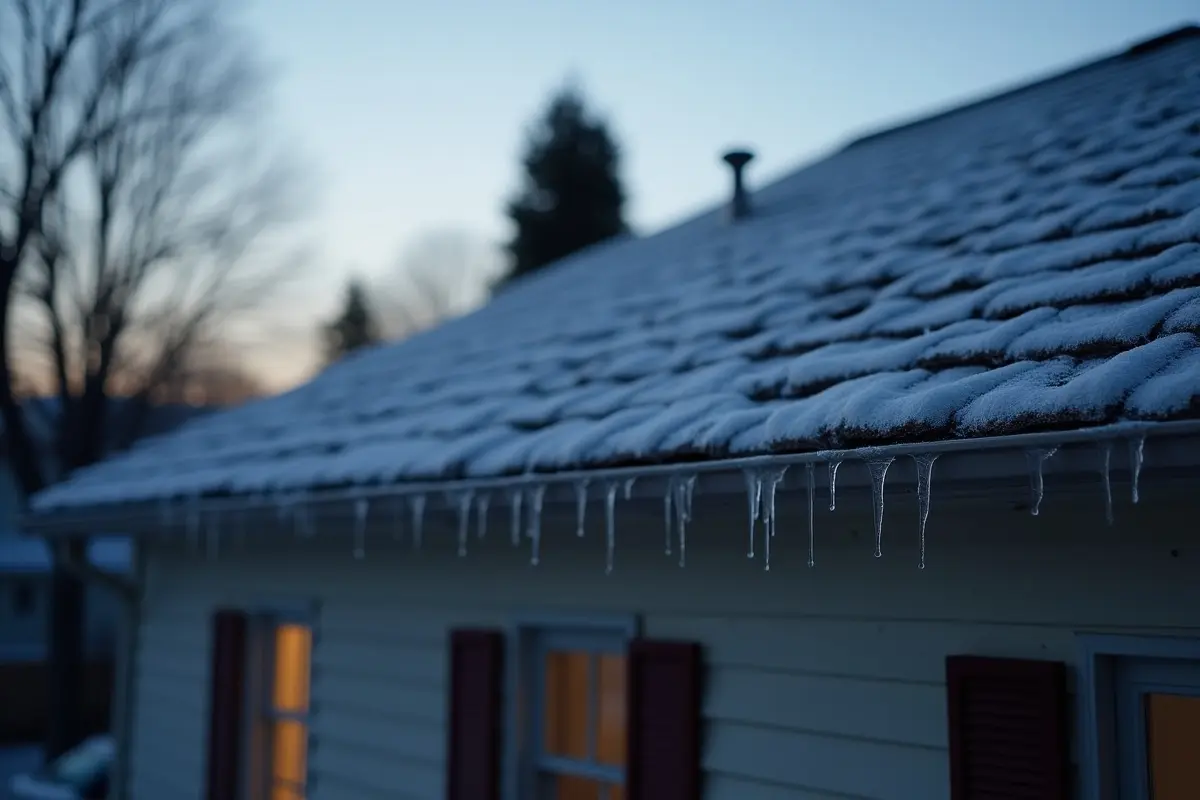
How to Prepare Your Roof for Winter
To prepare your roof for winter, begin before the first hard freeze to address small issues early. A roof that looks “fine” from the driveway can still have loose flashing, clogged gutters, cracked sealant, or weak attic ventilation. Those are the details that turn a normal winter storm into ceiling stains, ice dams, and emergency repair calls.
Start With a Roof Inspection Before Temperatures Drop
The best time to inspect a roof is usually early to mid-fall, when daytime temperatures are still above 45°F. Many roofing sealants and asphalt shingle repair products need mild weather to bond correctly. Once temperatures dip below freezing, repairs become slower, less effective, and more expensive.
A basic professional roof inspection usually costs $150 to $400, depending on roof size, pitch, and access. If the inspection includes drone imaging, attic checks, or a written report for insurance, the price can run closer to $500. The International Association of Certified Home Inspectors recommends checking roofs for damaged shingles, flashing defects, moss growth, and drainage problems because these are common sources of water intrusion.
You can do a ground-level inspection yourself with binoculars. Look for missing shingles, lifted edges, exposed nail heads, sagging areas, rusted flashing, and dark streaks near valleys. If your roof is steep, more than one story, or wet with leaves, stay off it.
What to Look for From the Ground
Pay close attention to the roof valleys, because they carry more water than flat roof sections. A clogged or damaged valley can push water under shingles during snowmelt. Valleys are also common places for leaves, pine needles, and small branches to collect.
Check the edges of the roof for curling shingles or gaps at the drip edge. Asphalt shingles often start failing at the edges first because wind can lift them. According to the National Roofing Contractors Association, roof systems should be inspected at least twice a year, typically in spring and fall, plus after major storms.
If you see granules collecting at the ends of downspouts, that can mean shingles are aging. A few granules are normal, but piles of coarse, sand-like material may point to worn asphalt shingles. Once shingles lose enough granules, they absorb more heat and shed water less effectively.
Clean Gutters and Downspouts Before Snow Arrives
Clean gutters are one of the simplest ways to prepare your roof for winter, yet they are often ignored until water starts spilling over the sides. When gutters clog, melting snow has nowhere to go. That water can refreeze along the eaves and help form ice dams.
Most homeowners pay $100 to $250 for professional gutter cleaning on a one- or two-story home. Larger homes, steep roofs, or homes with gutter guards can cost $250 to $450. If downspouts need flushing or minor repairs, add another $50 to $150.
Gutters should slope about 1/4 inch for every 10 feet toward the downspout. If water sits in the gutter after a rain, the pitch may be wrong. Standing water adds weight and can freeze into solid ice when temperatures drop.
Downspouts should discharge at least 5 feet away from the foundation. This is not only a basement issue. Water pooling near the home can freeze, expand, and worsen drainage around fascia boards and lower roof edges.
Don’t Forget Gutter Hangers and Seams
Gutter hangers should be spaced about every 2 to 3 feet in snow-prone climates. Wider spacing may allow gutters to sag under ice and packed snow. A sagging gutter can pull away from the fascia and leave a gap where water runs behind it.
Seams should be sealed before winter, not after the first leak. A tube of exterior gutter sealant costs about $8 to $15, while replacing a damaged gutter section can cost $10 to $25 per linear foot for aluminum. Copper gutters are much more expensive, often $25 to $40 per linear foot.
Repair Shingles, Flashing, and Sealant Problems
Small roofing defects get punished in winter. Water enters a small gap, freezes, expands by roughly 9%, and can push materials farther apart. That freeze-thaw cycle is one reason minor leaks often become visible after winter storms.
Replacing a few missing asphalt shingles often costs $150 to $500, depending on height, roof pitch, and matching materials. Flashing repairs around chimneys, skylights, and vents usually cost $200 to $700. More complex chimney flashing replacement can reach $1,000 or more if masonry work is needed.
Flashing deserves extra attention because it protects the spots where the roof changes direction or meets another surface. Chimneys, dormers, skylights, plumbing vents, and sidewalls all rely on properly installed flashing. If metal flashing is loose, rusted, bent, or covered in cracked roof cement, schedule repairs before freezing weather.
Caulk and roof cement are not permanent repairs for major flashing problems. They can help with small gaps, but they dry out and crack over time. A proper repair often means removing shingles around the area and installing new step flashing or counterflashing.
The Insurance Institute for Business & Home Safety notes that sealed roof decks and stronger edge details can reduce water intrusion during severe weather. While those upgrades are usually done during roof replacement, winter prep is a good time to identify weak areas for future work.
Check the Attic for Moisture, Air Leaks, and Ventilation
A winter roof problem often starts inside the house. Warm air leaking into the attic can melt snow on the roof deck. That melted snow runs down to the colder eaves, freezes, and forms an ice dam.
The U.S. Department of Energy recommends air sealing the attic before adding insulation because insulation does not stop air movement by itself. Common leak points include recessed lights, attic hatches, plumbing chases, bath fan openings, and wiring holes. Air sealing an attic typically costs $500 to $2,500, depending on access and how many leaks need treatment.
Attic insulation is measured by R-value. In many cold climates, the Department of Energy recommends attic insulation around R-49 to R-60. That often equals about 16 to 20 inches of loose-fill fiberglass or 13 to 17 inches of cellulose, depending on the product.
Ventilation matters too. A common rule used in residential roofing is 1 square foot of net free ventilation for every 300 square feet of attic floor when balanced intake and exhaust vents are present. Without good intake at the soffits, ridge vents may not work properly.
Signs Your Attic Needs Attention
Look for frost on nail tips, damp insulation, stained roof sheathing, or a musty smell. Frost inside the attic is a warning sign that warm indoor air is carrying moisture into a cold space. When that frost melts, it can wet insulation and wood.
Bathroom fans should vent outdoors, not into the attic. A fan dumping moist air into attic space can add gallons of moisture over a winter season. Extending a bath fan duct to the exterior often costs $250 to $800, depending on roof or wall access.
Trim Trees and Remove Roof Debris
Tree branches should not scrape the roof or hang directly over it. During winter storms, snow-loaded limbs can break and damage shingles, gutters, skylights, or vents. Branches also drop leaves and needles that trap moisture against roofing materials.
A safe clearance target is 6 to 10 feet between tree limbs and the roof surface. For large trees, expect professional trimming to cost $250 to $900. If a tree is close to power lines or requires climbing and rigging, the price can exceed $1,500.
Debris should be removed from valleys, behind chimneys, and around skylights. Wet leaves can act like a sponge, holding water against shingles for days. In freezing weather, that wet debris turns into ice and blocks normal drainage paths.
Moss is another issue before winter. It holds moisture and can lift shingle edges as it thickens. Zinc or copper strips near the ridge can reduce moss growth over time, while professional moss treatment usually costs $200 to $600.
Decide What Work Makes Sense for Your Roof
Not every roof needs the same winter prep. Age, condition, climate, roof slope, and past leak history should guide your choices. A 6-year-old roof with clean gutters has different needs than a 22-year-old roof with curling shingles and attic frost.
Use this comparison to decide which option fits your situation.
| Situation | Best winter prep choice | Typical cost range |
|---|---|---|
| Roof is under 10 years old, no leaks, gutters drain well | Inspection, gutter cleaning, debris removal | $150-$500 |
| A few missing shingles or minor flashing gaps | Targeted roof repairs before freezing weather | $250-$1,000 |
| Ice dams happened in past winters | Attic air sealing, insulation, ventilation review | $800-$4,500 |
| Roof is 18-25 years old with granule loss or curling | Repair only urgent leaks, budget for replacement | $500-$2,000 short term |
| Active leak or stained ceiling before winter | Professional leak diagnosis and repair immediately | $300-$1,500+ |
If your roof is newer and has no history of leaks, basic maintenance may be enough. That means cleaning gutters, checking penetrations, clearing debris, and confirming that downspouts discharge away from the house.
If your roof is older than 20 years, winter prep should be more cautious. Asphalt shingles commonly last 20 to 30 years, but exposure, ventilation, installation quality, and storm history can shorten that window. Spending $1,500 on scattered repairs may not make sense if a full replacement is likely within two years.
If ice dams are your recurring problem, do not focus only on the shingles. Heat cables may help in limited trouble spots, but they do not fix attic air leaks or poor insulation. Heat cable installation often costs $500 to $1,500, plus electricity use during winter.
Plan for Snow, Ice, and Emergency Access
Once heavy snow starts, roof work becomes harder and riskier. Snow removal from a roof usually costs $300 to $700 for an average home, but steep or large roofs can cost $1,000 or more. Emergency calls after storms often add 20% to 50% compared with scheduled work.
A roof rake can help remove snow from the first few feet above the eaves. Basic roof rakes cost $40 to $120, while longer or wheeled versions can cost $150 to $250. Use them from the ground and avoid scraping down to the shingles, since aggressive scraping can remove granules.
Snow load limits vary by location and building design. FEMA notes that wet snow is much heavier than dry snow, with one foot of wet snow weighing about 20 pounds per square foot. Ice is heavier still, so repeated storms with rain, freeze, and snow deserve attention.
Keep paths clear to exterior vents, gas meters, and downspout outlets. Blocked furnace or water heater vents can create safety hazards, especially with sidewall-vented appliances. Marking vent and meter locations before the first big storm can save time when snow piles up.
Schedule Repairs Before Roofing Crews Are Booked
Roofing contractors get busy after the first major storm. In many cold-weather regions, fall schedules fill two to six weeks ahead. Calling in September or October gives you a better chance of getting repairs done before materials stiffen and weather windows shrink.
Ask for photos of problem areas before approving work. A good contractor should be able to show missing shingles, failed flashing, cracked boots, or soft decking. For any repair over $1,000, request a written scope that lists materials, labor, disposal, and warranty terms.
Make sure the contractor is licensed where required and carries liability insurance. Some states also require workers’ compensation coverage for roofing companies. The National Roofing Contractors Association suggests checking references, physical business address, and manufacturer certifications before hiring.
If you want to prepare your roof without overspending, handle the safe ground-level tasks yourself and hire out anything involving height, flashing, structural issues, or attic moisture. The goal is to fix the weak points before snow and ice find them.